Why ADHD Teens Can't Wake Up On Their Own — And The Silent Alarm Giving Parents Hope For Their Future
If you've been your teenager's alarm clock for years and you're terrified they'll never be independent enough for college or a job — scientists just found out why. And the fix is simpler than you think.
By Jessica Martinez
Mother to a Teen with ADHD
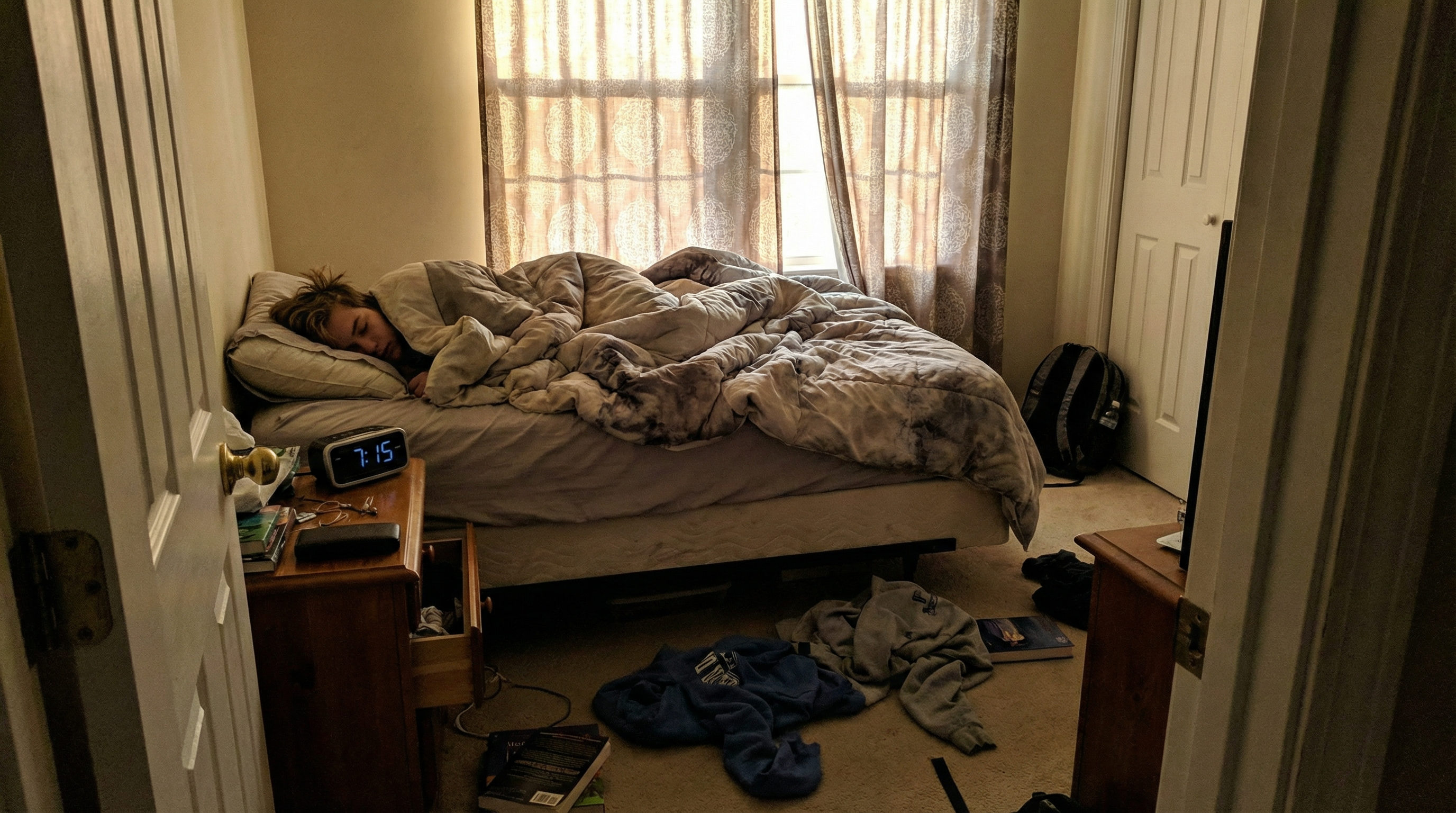
7:15 AM.
The alarm has gone off three times already.
You're standing in the doorway of your teenager's room, watching them sleep through it. Again.
You call their name. Nothing. You shake their shoulder. They groan and pull the covers tighter.
By 7:45, you're both late. You're frustrated. They're angry. And you're starting to wonder — if they can't wake up at 16, what happens when they're 18 and living in a college dorm? What happens when they need to be at work at 7 AM and you're not there?
That's the question that keeps you up at night.
But here's what nobody told you.
It's not your teenager being lazy. It's not a discipline problem. And it's not your parenting.
New brain research just revealed the real reason ADHD teens can't wake up — and it has nothing to do with willpower or effort. The problem has been sitting on their nightstand this whole time.
The Mom Who Couldn't Take It Anymore
Lisa Thompson is a mom from Denver. Her son Ryan is 14 and has ADHD.
For six years, mornings in their house were a war zone.
"I tried everything," Lisa says. "Multiple alarms. Reward charts. Taking away his phone. Threatening to pour water on him. I even talked to his doctor about sleep medication."
Nothing worked.
Ryan would sleep through every alarm. Or worse — he'd wake up completely overwhelmed. Angry. Disoriented. Unable to function.
The school started calling. Detention for tardiness. Missed tests. A teacher who told Lisa that Ryan "had an attitude problem in the mornings."
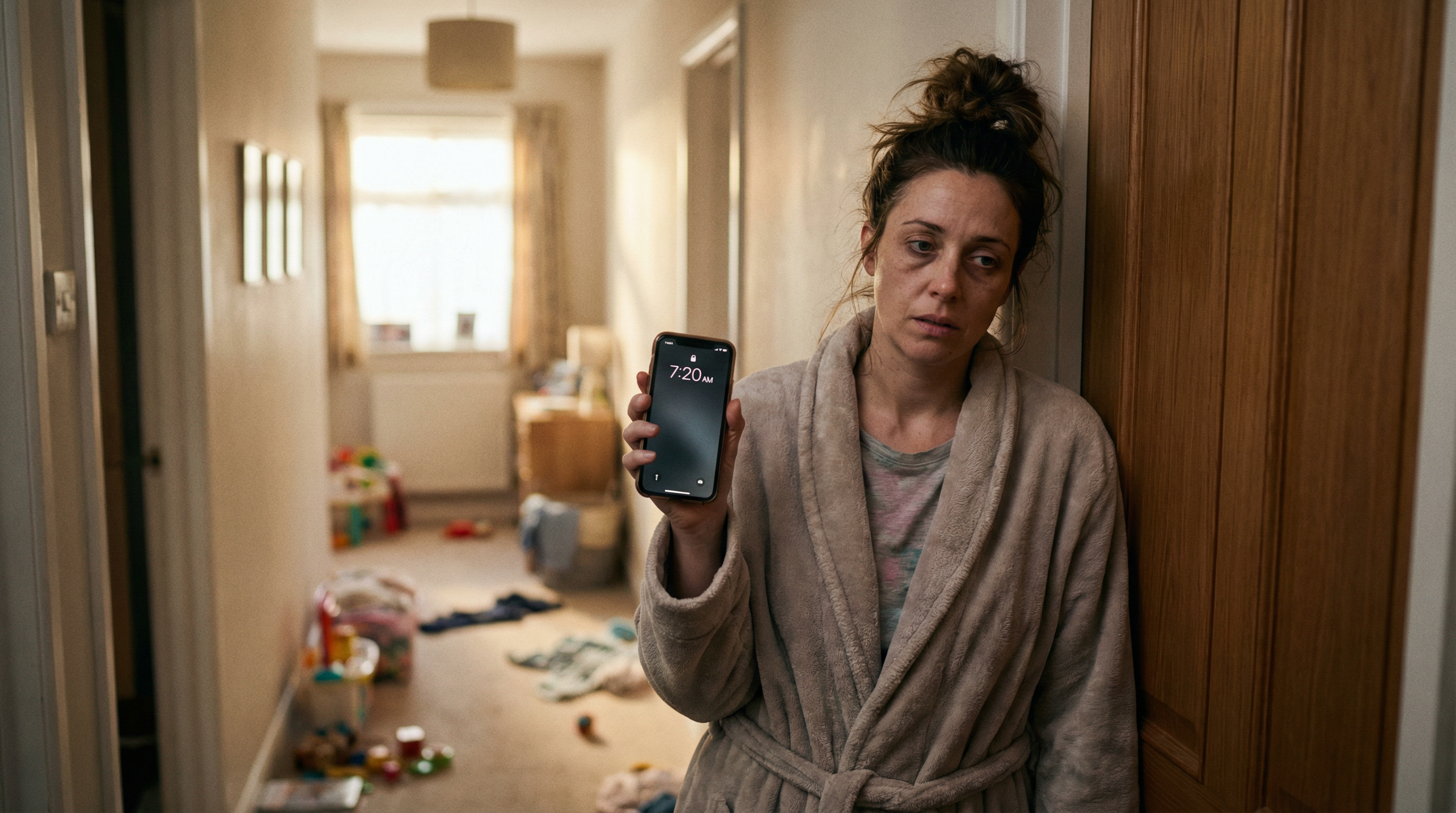
"I loved my son so much," Lisa says, her voice cracking. "But I dreaded mornings. I literally dreaded waking up because I knew what was coming."
But what scared her most wasn't the tardiness. It was the future.
"Ryan starts high school next year. Then college. Then a job. And I'm still having to physically drag him out of bed every single morning. What happens when I'm not there?"
That's when Lisa decided: there has to be a better way. She made an appointment with a pediatric neurologist. And what she learned changed everything.
The Hidden Reason ADHD Teens Can't Wake Up
The doctor explained something called the Auditory Overload Cascade.
Here's what happens when a loud alarm goes off:
The alarm hits while they're still asleep.
Their brain can't filter the sound properly. For neurotypical kids, this is a gentle nudge. For ADHD brains, it's a shock.
Instead of a gentle wake-up, the sound triggers instant panic mode.
Their nervous system floods with cortisol and adrenaline. Their heart rate spikes. All of this happens before they're even conscious.
By the time their eyes open, they're already in fight-or-flight.
They're not being difficult. Their brain has literally been put into emergency mode before the day has even started.
Lisa finally understood. Ryan wasn't being difficult. His brain was being attacked the moment he woke up.
When a teenager starts every day in panic mode, it affects everything. Their anxiety gets worse. Their confidence drops. They start to believe they can't do anything right. And over time, their brain learns to expect stress the moment they open their eyes.
"Every morning your child wakes up overwhelmed, their brain reinforces that pattern. Over time, this becomes their baseline. And that's really hard to undo."
Why Nothing Else Works
The doctor explained why all of Lisa's attempts had failed:
Louder alarms? That just makes the overload worse. More sound = more panic.
Multiple alarms? That's multiple panic triggers in a row. Their brain never gets a chance to recover.
Wake-up lights? They help, but they don't solve the sound problem.
Waking them up yourself? You can't do that forever. And it doesn't teach them the independence they need.
The Solution That Changes Everything
The doctor pulled out a small bracelet and placed it on Lisa's wrist.
"Feel this," he said.
A gentle vibration pulsed against her skin. Soft. Calm. Nothing like an alarm.
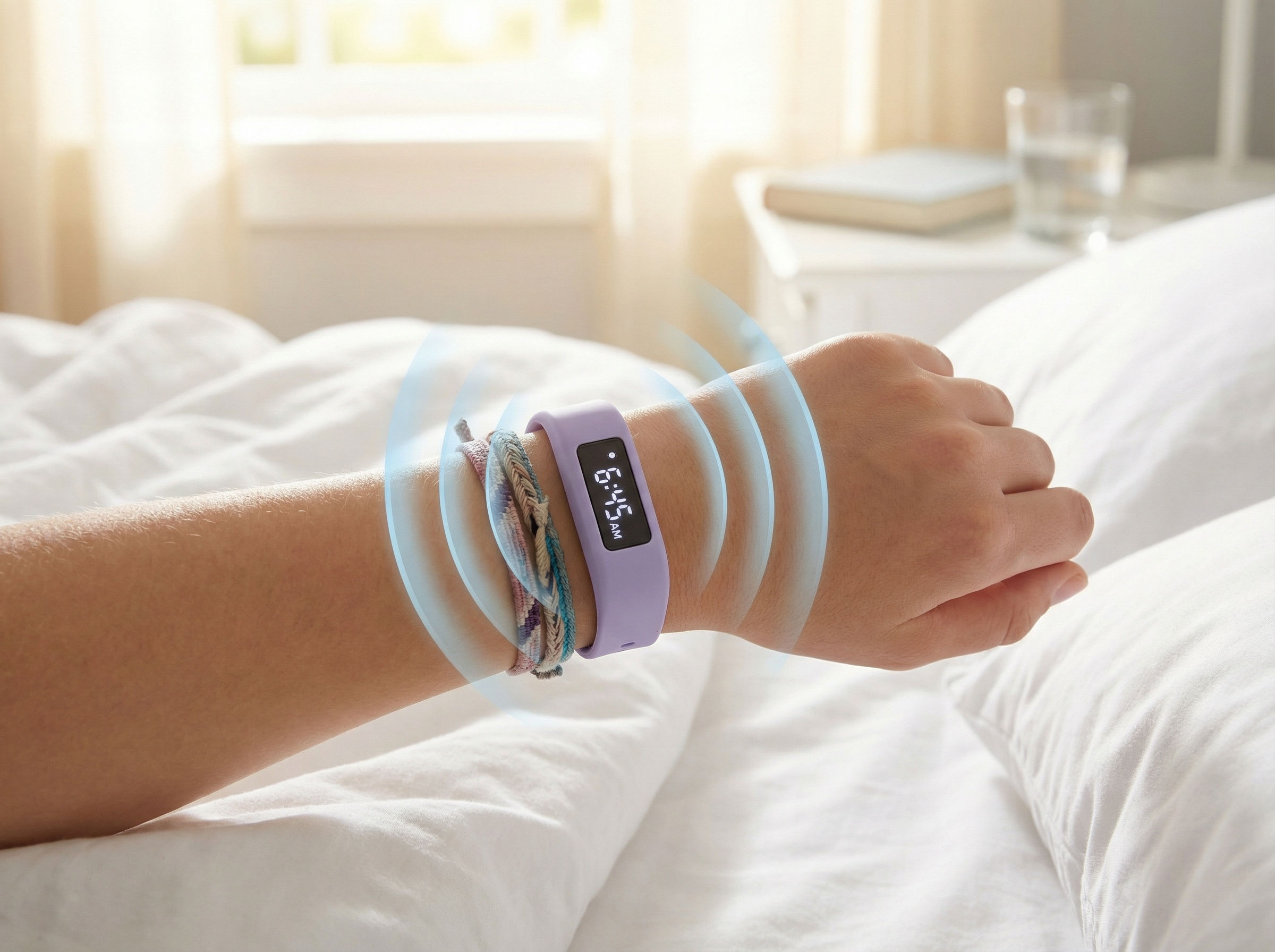
"This is called Tactile Priority Processing," he explained. "Instead of sound, it uses touch to wake up the body. And the ADHD brain processes touch completely differently than sound — it doesn't trigger the panic response."
The bracelet was called the Nymera CalmRise. And it works completely differently than any alarm your teenager has ever tried.
Here's how it works:
Instead of blasting sound into their ears, CalmRise sends a gentle vibration to their wrist
Their nervous system processes touch as a safe signal — not a threat
The vibration wakes up their body first, then their brain — without any stress response
No panic. No overwhelm. Just a calm, gradual wake-up they can actually handle
It made perfect sense to Lisa. But she was skeptical.
"Will it actually wake him up?" she asked.
"Try it for a week," the doctor said. "If it doesn't work, bring it back."
The First Morning
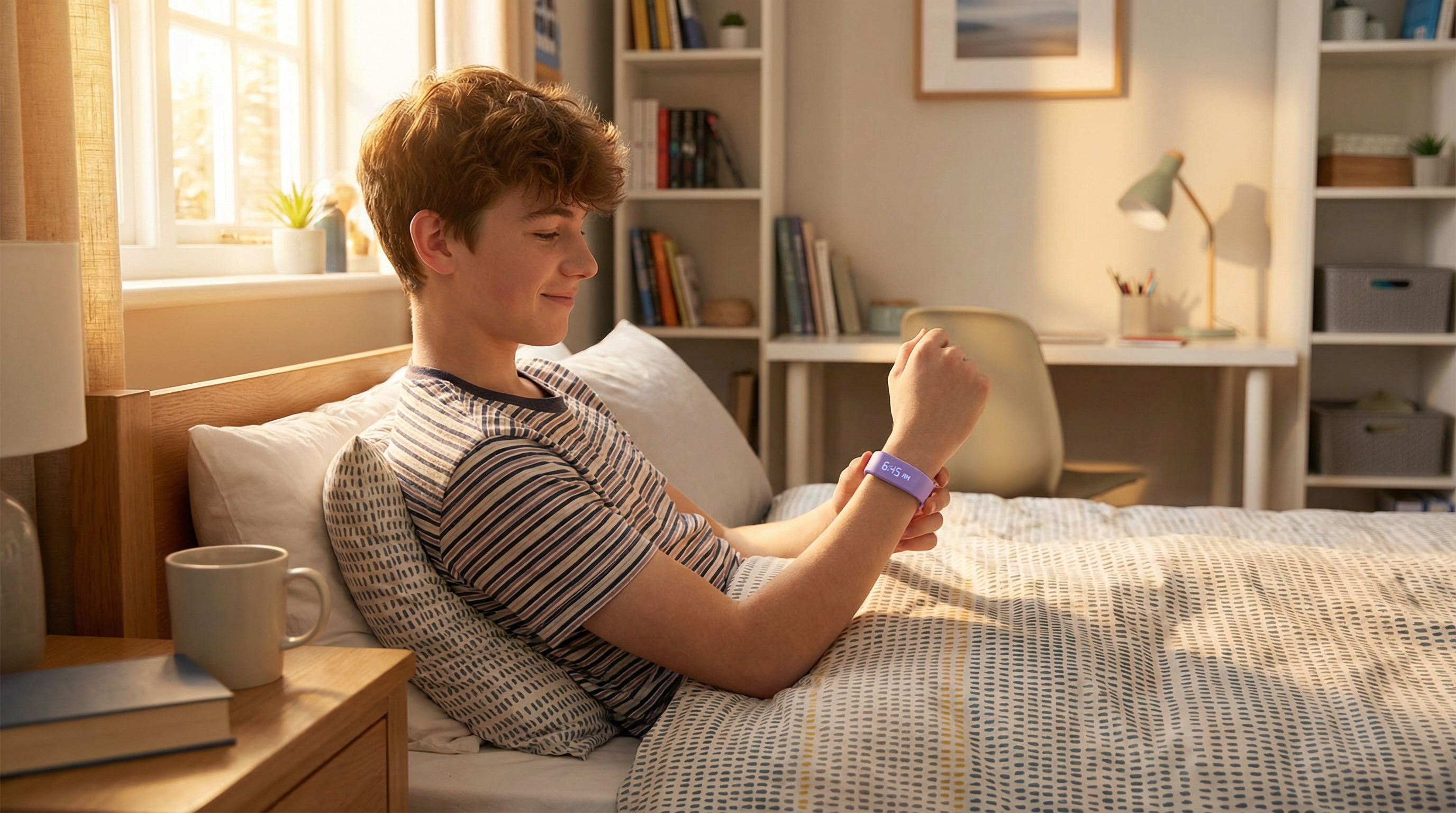
Lisa put the Nymera CalmRise on Ryan's wrist that night. She set it for 6:45 AM. And she barely slept, waiting to hear the usual chaos.
The next morning, she stood outside his door, bracing herself.
6:45 came.
Silence.
Then she heard Ryan's feet hit the floor. He walked to his dresser. Started getting dressed.
Lisa stood there in shock.
When Ryan came out of his room, he looked... calm. Normal. Like any other teenager on any other morning.
"Hey Mom," he said.
Lisa started crying.
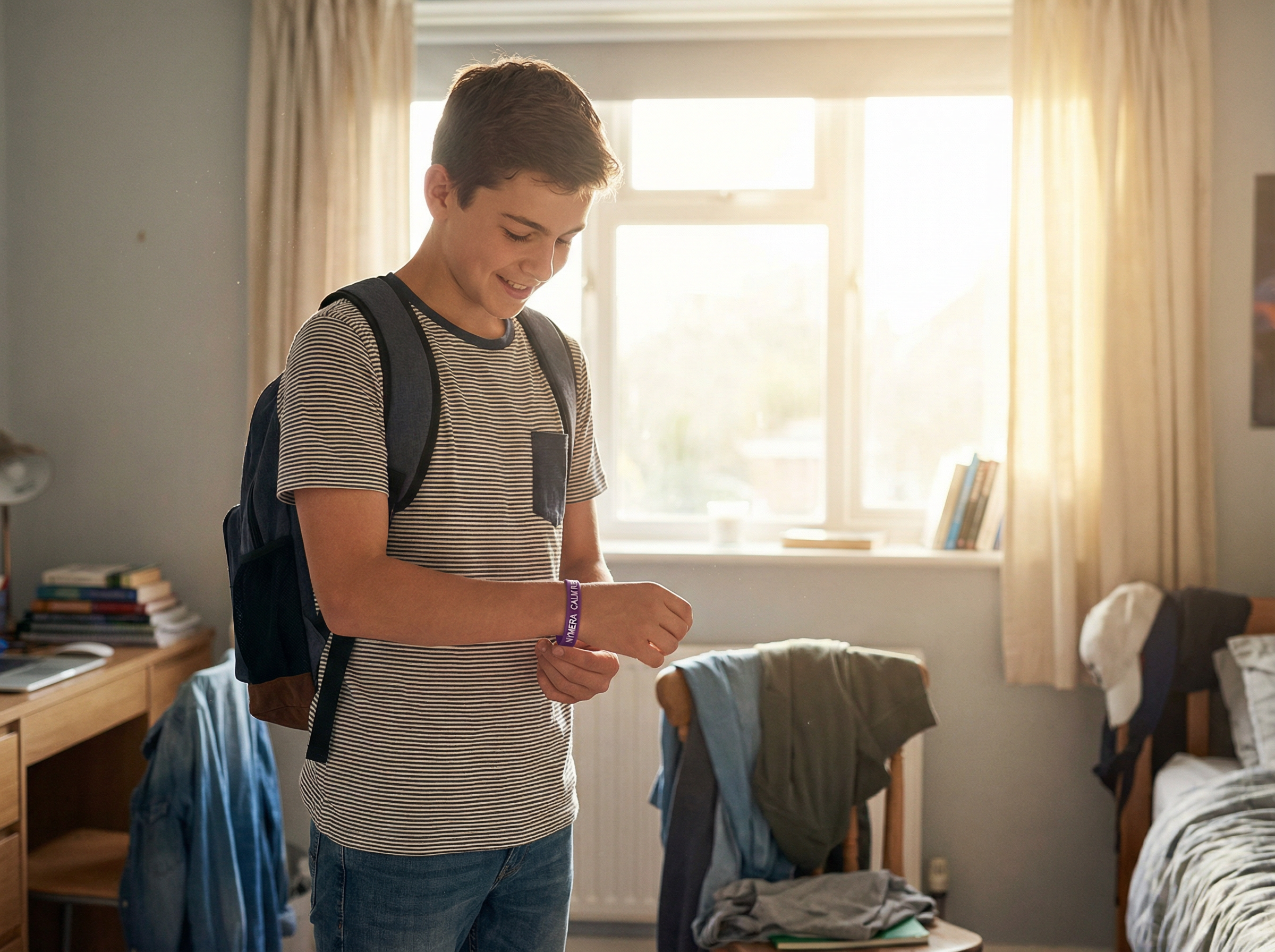
"Within three days, our mornings were completely different," she says now. "Ryan woke up without me. He got out of bed on his own. He wasn't angry or disoriented."
Within two weeks, the morning battles were completely gone. No more tardiness. No more fights. No more dread.
"I got my son back," Lisa says. "And for the first time, I actually believe he's going to be okay when he leaves for college. That he can do this on his own."

It's Not Just Lisa
Since then, over 28,000 families have discovered the Nymera CalmRise. And the stories are almost identical.
"He woke up on his own for the first time in 4 years"
"My 15-year-old son with ADHD has never once woken up without me physically shaking him. First morning with CalmRise, he was up before I even knocked on his door. I stood in the hallway and cried."
Michelle R.
Austin, TX
"I can finally stop being his alarm clock"
"I've been waking my 14-year-old up every single morning for 6 years. I was terrified he'd never be able to live independently. Two weeks with CalmRise and he's setting his own alarm and getting up on his own. I actually slept in on Saturday."
David K.
Chicago, IL
"His teachers noticed the difference immediately"
"My son has ADHD and sensory processing issues. Regular alarms sent him into full panic mode before school even started. The CalmRise vibration is so gentle that he wakes up calm. His teachers said he's been more focused and less anxious. I never thought I'd see that."
Jennifer L.
Seattle, WA
"Solved 7 years of morning battles in one week"
"We tried everything. Reward charts, multiple alarms, threats, bribery, sleep specialists. Nothing worked. Nymera CalmRise solved our morning problems in less than a week. My daughter is 16 and she actually thanked me for getting it."
Marcus T.
Atlanta, GA
The results are consistent:
And all because they stopped the Auditory Overload Cascade.
Special Offer — Save 30% Today
Limited time offer for parents reading this
GET 30% OFF NYMERA CALMRISE →Common Questions Parents Have
Why This Matters Right Now
Word about Nymera CalmRise is spreading fast. Pediatricians are recommending it. ADHD parent groups are sharing it. Schools are allowing teens to use it in class for task transitions.
But here's what really matters:
Every morning your teenager wakes up in panic mode, it gets harder to change the pattern.
Their brain gets used to starting the day with stress. Their anxiety builds. Their confidence drops. And the window for building the independence skills they need for college and adulthood gets smaller.
The sooner you stop the Auditory Overload Cascade, the better.
What You Get
Adjustable wristband (fits ages 5+)
Comfortable enough to sleep in every night
Multiple alarm settings
Set up to 3 separate wake-up times
Vibration strength control
Adjustable from gentle to strong
Waterproof design
No worries about sweat or water
30-day battery life
Charge once a month, not every day
Silent operation
Won't wake siblings or roommates
Free smartphone app
Easy setup and scheduling from your phone
60-Day Money-Back Guarantee
Risk-free trial — full refund if it doesn't work
Two Choices
Choice One: Do Nothing
Choice Two: Try CalmRise
Imagine that morning. Now imagine a week of those mornings. A month. A year.
No more war zone. No more guilt. No more dreading the alarm. Just calm, peaceful mornings where your teenager wakes up feeling capable — and you feel like the parent you want to be.
Special Offer — Save 30% Today
Get your Nymera CalmRise at the lowest price
60-Day Money-Back Guarantee — Risk-Free
Your child's next calm morning is just one click away.
This is an advertisement and not an actual news article, blog, or consumer protection update. This website is not intended to provide medical advice or to take the place of medical advice from your personal physician. Nymera CalmRise is not a medical device and is not intended to diagnose, treat, cure, or prevent any medical condition. Consult your child's doctor before making changes to their routine. Results may vary. Testimonials represent individual experiences and are not guaranteed outcomes.
Trademarks utilized on our website belong to their respective owners. Through research and experienced editors we provide feedback about products. We are independently owned. This website is supported by referral fees from featured products.